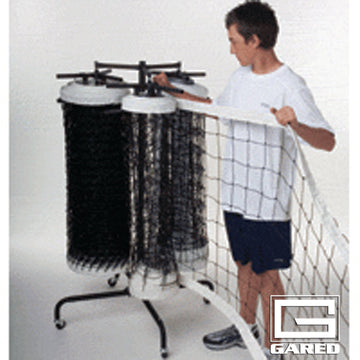
Volleyball Net Storage: Single, Double, or Triple Capacity
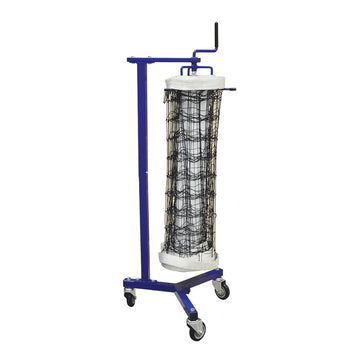
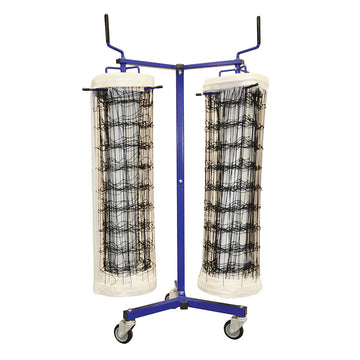
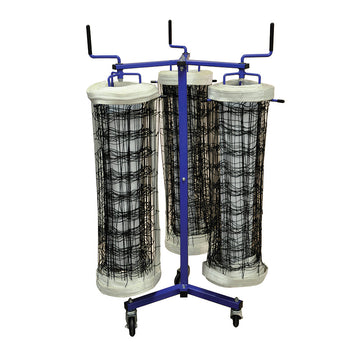
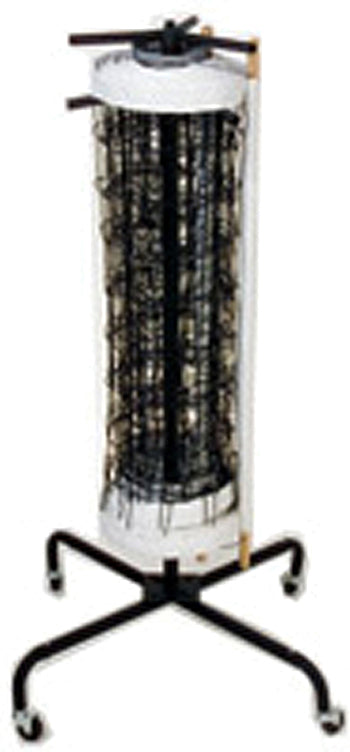
Every rack in this collection is built around one job: getting tangled nets, cables, and hardware off the gym floor and onto the wall. We carry both brands in three configurations, so the first decision is simply how much volleyball net storage your program actually needs. A single net storage rack — like the Jaypro Net Keeper Single Net or the Gared Store-It 9930 — suits a single court or a program with one primary competition net. Programs running multiple courts or storing practice nets alongside a match-day setup should look at the double net rack (Jaypro Net Keeper Double Net, Gared 9940) or step up to a triple net storage rack (Jaypro Net Keeper Triple Net, Gared 9933) if three complete net systems need a home between seasons.
Matching Rack Capacity to Court Count
A quick way to size a volleyball rack: count how many complete net-and-cable sets your athletic department actually stores at once, not just how many courts you run. Many schools keep a backup net in reserve, which pushes a "one-court" program into double-rack territory. Club facilities with multiple simultaneous courts, or those that rotate nets in and out for tournaments, are typically better served by the triple-capacity units at the top of the $354–$513 price span.
Jaypro Net Keeper vs. Gared Store-It
Both manufacturers represented in this volleyball net storage rack collection build wall-mounted units designed to hold nets, cables, and hardware in one place instead of scattered across a storage closet floor. Jaypro's Net Keeper line and Gared's Store-It series (model numbers 9930, 9940, and 9933) are each offered in single, double, and triple configurations, so the practical choice often comes down to brand preference, existing equipment in your gym, and where each unit falls within the price range. Facility managers who already run Jaypro or Gared volleyball systems may prefer to match their storage rack to their net brand, though either line will accommodate standard volleyball nets and cables.
What's Included
These are storage racks, not full volleyball systems — they're designed to organize nets, cables, and related hardware that your program already owns or is purchasing separately. If you're outfitting a new gym, plan for the rack alongside your net and post purchase rather than expecting the rack itself to include a complete system.
Wall-Mount Installation and Space Planning
All six racks in this collection are wall-mounted units, making them a fit for athletic storerooms, equipment closets, or gym walls where floor space is at a premium. Because mounting hardware and exact footprint vary by model and by single/double/triple capacity, measure your available wall section and confirm stud spacing before ordering — a triple-capacity rack naturally requires more wall width and depth than a single net storage rack. For facilities converting an existing closet, sketch out where nets currently pile up and use that as a baseline for which capacity actually solves the clutter problem.
Planning for Growth
If your program is expanding — adding a JV team, a second court, or a club program alongside varsity — it's often worth sizing up one capacity level rather than replacing the rack in a year or two. The price difference between a single and double net rack in this lineup is generally smaller than the cost of buying twice.
Who These Racks Suit
This collection is built for high school and college athletic departments, volleyball clubs, park-and-rec facilities, and church or community gyms that need a repeatable, wall-mounted way to store volleyball nets between seasons or between practices. If your current solution is a net stuffed into a bag on the floor or draped over equipment carts, a dedicated volleyball net storage rack from Jaypro or Gared keeps hardware from getting lost and keeps the storeroom walkable. Facility managers comparing options across brands will find the core decision is capacity (single, double, triple) first, and brand preference second.
Shopping This Collection
Browse all six models above — three from Jaypro's Net Keeper line and three from Gared's Store-It series — filtering by the net capacity your program needs. Prices across the collection run $354 to $513, with capacity being the primary price driver in both brands. If you're unsure whether single, double, or triple capacity fits your gym, count your current net systems (including backups) before choosing.
Frequently Asked Questions
What is a volleyball net storage rack used for?
A volleyball net storage rack is a wall-mounted unit that organizes nets, cables, and related hardware so they aren't left tangled on the gym floor or stuffed into bags. Our collection includes single, double, and triple net racks from Jaypro and Gared, ranging from $354 to $513, sized to how many net systems a facility stores.
What are volleyball systems?
A volleyball system typically refers to the complete net, posts, and cable setup used to run a match, as distinct from a storage rack, which is the wall-mounted unit used to organize that equipment between uses. This collection carries storage racks only, from Jaypro and Gared, in single, double, and triple net capacities.
How do I choose between a single, double, and triple net storage rack?
Count how many complete net-and-cable sets your program actually stores, including backup nets, then match that number to a single, double, or triple capacity rack. Programs with one court and no spare net typically need only a single rack; multi-court or tournament-hosting facilities often need double or triple capacity.
What's the difference between Jaypro and Gared volleyball net storage racks?
Both brands offer wall-mounted volleyball net storage racks in single, double, and triple net configurations within this collection's $354–$513 price span. Jaypro's line is called Net Keeper; Gared's is the Store-It series (models 9930, 9940, 9933). Choice often comes down to brand match with existing gym equipment.
How are volleyball nets set up on court?
Volleyball nets are strung between two posts using tensioning cables and hardware, then adjusted to regulation height for the level of play. When not in use, that same net, cable, and hardware set is best kept organized on a wall-mounted storage rack like the ones in this collection rather than left loose.
Are these racks wall-mounted or freestanding?
All six volleyball net storage racks in this collection — from Jaypro's Net Keeper line and Gared's Store-It series — are wall-mounted units. Measure your available wall space and confirm mounting requirements before ordering, especially for double or triple capacity models, which need more wall width and depth.
What price range should I expect for a volleyball net storage rack?
Racks in this collection run from $354 to $513, with price generally increasing from single to double to triple net capacity across both the Jaypro Net Keeper and Gared Store-It lines. Choosing the right capacity for your program is the main factor in where a purchase falls within that range.